UI/UX Design · 2021 · Purwadhika Digital Technology School
Spotify Karaoke Party Room
Turning isolation into connection through music.
4 months
UI/UX Designer
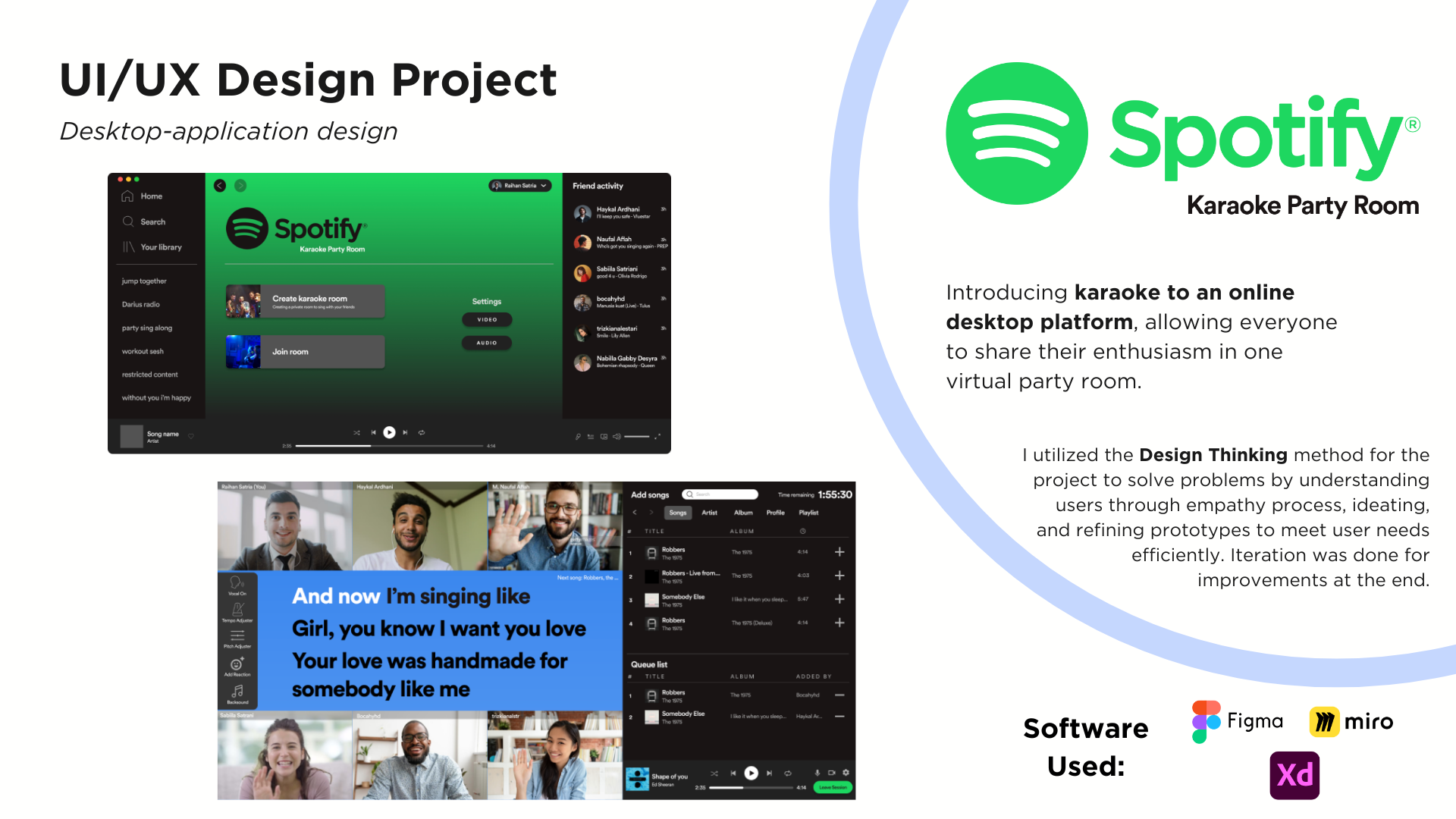
Gallery
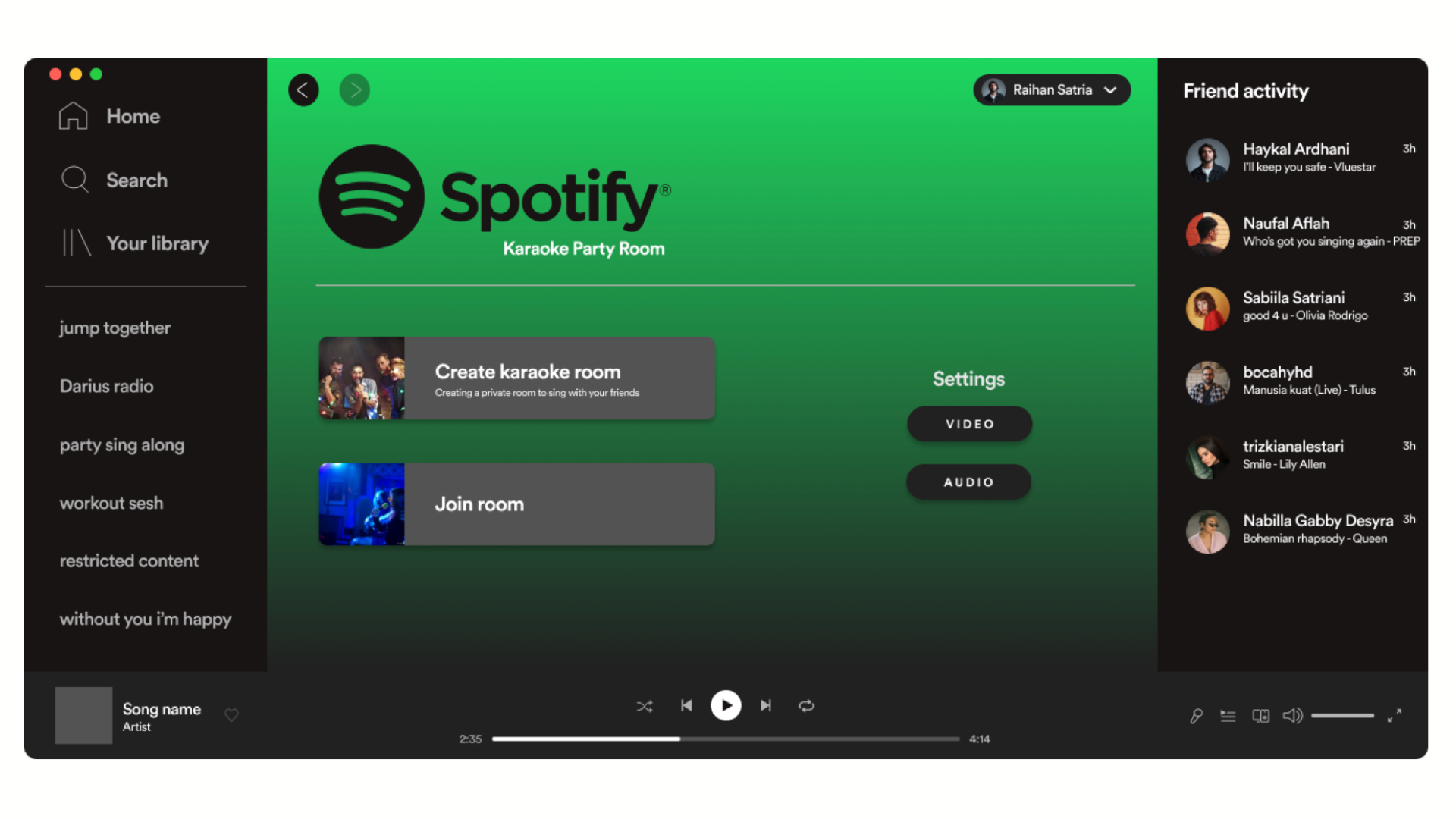
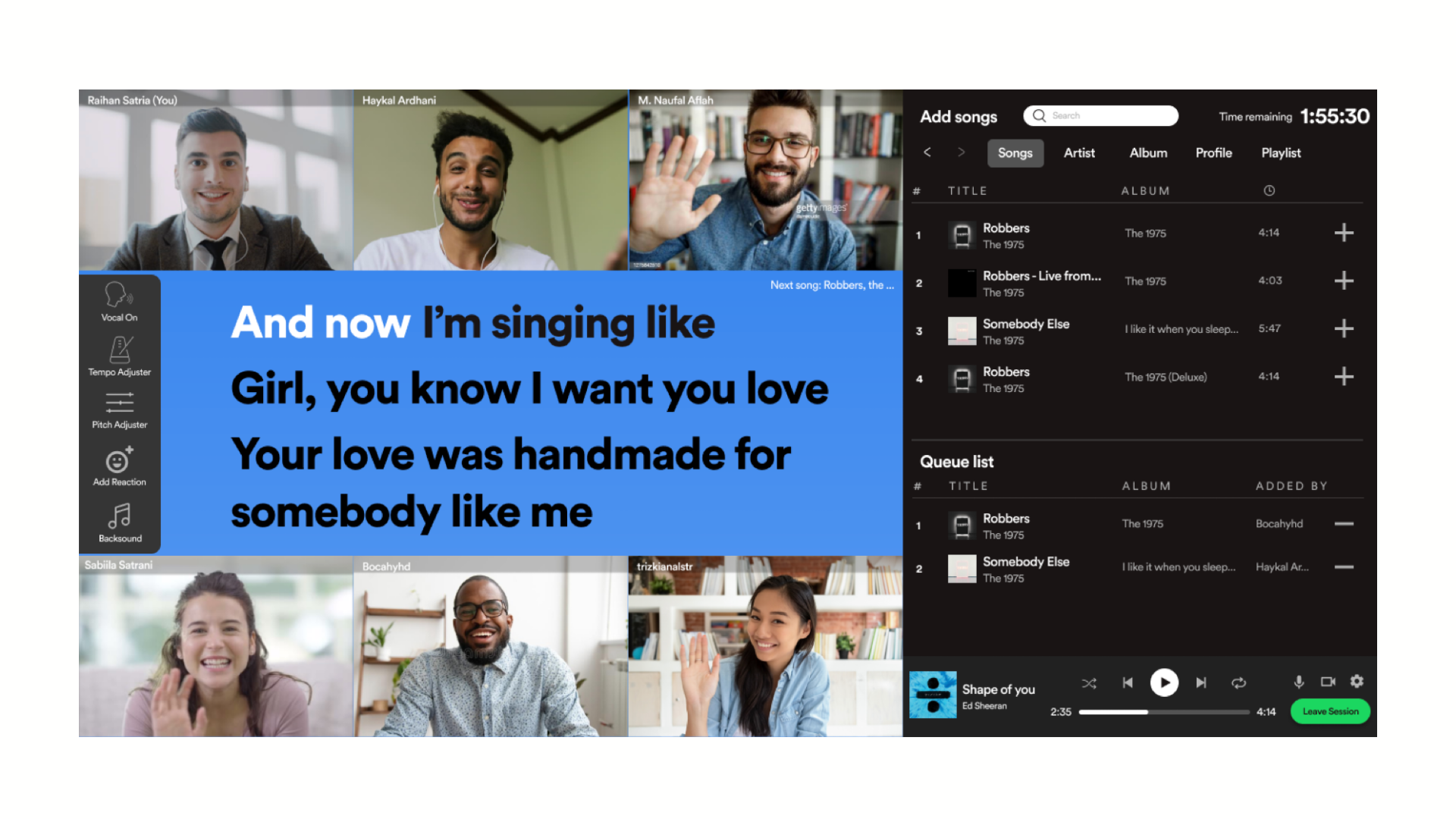
Overview
A conceptual feature for Spotify letting users host live karaoke sessions with friends remotely, designed during COVID-19 lockdowns using the full 5-phase Design Thinking methodology. Competitor analysis covered Smule, JOOX, and Apple Music — none offered live social audio performance. A quantitative survey confirmed demand, with 60% of respondents requesting video integration.
The Problem
COVID-19 made social gatherings impossible. Video calls felt formal and fatiguing. People missed spontaneous, fun activities like karaoke that create genuine shared joy. Existing apps either lacked the party atmosphere or Spotify's music catalog.
Research & Discovery
User interviews — remote socialization pain points and video call fatigue
Competitor analysis — Smule (karaoke), JOOX (streaming), Apple Music
Quantitative survey — Google Forms, 20 respondents (age, feature preferences)
Empathy mapping — emotional journey of social isolation
Usability testing — Maze remote testing, 4 participants, 9 structured tasks
Key Insight
“Users didn't want to just sing. They wanted the 'party' atmosphere — the feeling of being in a shared room, not a video call. The missing ingredient in all existing solutions was shared spontaneity and the sound of friends reacting in real time.”
Design Process
Empathize — interviews and survey (55% of users aged 15–24)
Define — HMW: 'Increase enjoyment and avoid boredom through virtual connection'
Ideate — Crazy 8: 8 concepts; karaoke room + scoring selected
Prototype — low-fidelity flows (Whimsical) → high-fidelity UI (Figma, Spotify DS)
Test — Maze moderated testing; Task 3 returned only 25% success rate
Critical Pivot
Task 3 — 'Make a Room' — returned a 25% success rate. Verbatim feedback: 'I feel lost, don't know what to do in this page.' The single-page complex form was replaced with a 3-step wizard: Room Name → Privacy → Invite. This was the most important design decision in the project.
Results
80.5% overall usability success across 9 structured tasks
Task 3 failure directly informed the 3-step wizard pivot
60% of survey participants independently requested a video feature
Validated within Spotify's established design system — no brand inconsistency
Reflection
“The most valuable data point wasn't the 80.5% success rate — it was the 25% failure on Task 3. Design systems are powerful constraints. Working within Spotify's established language taught me how to innovate while maintaining consistency.”